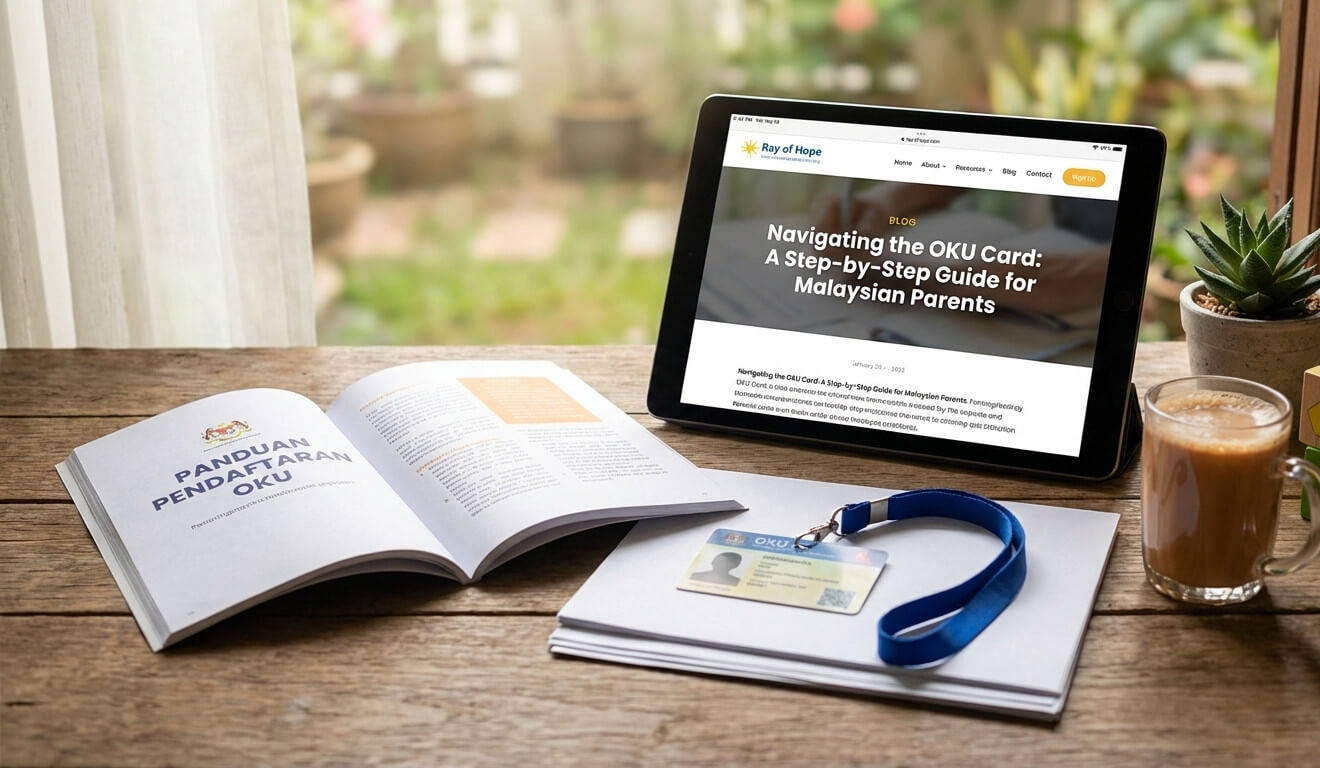
For many parents, the moment you first hold the OKU (Orang Kurang Upaya) registration form in your hands, it can feel incredibly heavy. It isn’t just a piece of paper; it represents a whirlwind of emotions—acceptance, worry for the future, and perhaps a little bit of fear about “labeling” your child.
At Ray of Hope, we meet many families standing at this exact crossroads. We want to tell you something important: The OKU card is not a label of limitation. It is a key. It is a key that opens doors to support, education, and resources that your child deserves. If you are feeling overwhelmed, take a deep breath. Let’s walk through this process together, step-by-step.
Why Consider the OKU Card?
In Malaysia, the OKU card is issued by the Jabatan Kebajikan Masyarakat (JKM). While some parents worry about the stigma, the practical benefits are designed to lighten your load:
- Education: Access to Special Education Integrated Programs (PPKI) and specialized learning centers.
- Financial Aid: Monthly allowances for students and workers with disabilities (subject to eligibility).
- Healthcare: Waiver of registration and treatment fees at government hospitals and clinics.
- Daily Life: Discounts on public transport (RapidKL, KTM), flights (Malaysia Airlines), and even utility bills.
More than the discounts, the card ensures that the system “sees” your child and provides the legal protections they need as they grow.
Step 1: Acceptance and Consultation
The first step doesn’t happen at a government office; it happens in your heart. Talk to your spouse or a trusted friend. Once you are ready, visit a professional.
To apply for the card, you need a formal diagnosis. You can visit:
- A Government Hospital/Clinic: See a Pediatrician or a Psychiatrist.
- A Private Specialist: Ensure they are registered with the Malaysian Medical Council (MMC).
A Heartfelt Note: Hearing the diagnosis can be hard. Remember, your child is still the same beautiful person they were five minutes before the doctor spoke. The diagnosis just gives you a map to help them better.
Step 2: Preparing the Documents
Gathering paperwork can feel like a chore, but having everything ready makes the process much smoother. You will need:
- The Borang Pendaftaran OKU (BPPOKU 2019): You can download this from the JKM website or pick one up at a JKM office or government clinic.
- Passport-sized photos of your child.
- A copy of your child’s Birth Certificate or MyKid/MyKad.
- A copy of the Parent/Guardian’s MyKad.
- Medical Reports: The section in the application form must be signed and stamped by the doctor who evaluated your child.
Step 3: Submitting the Application
You can now apply online through the Sistem Maklumat Orang Kurang Upaya (SMOKU) or visit your nearest Pejabat Kebajikan Masyarakat Daerah (JKM).
If you go in person, the officers are usually very helpful. Don’t be afraid to ask questions. They see hundreds of families just like yours every month. You are part of a much larger community than you realize.
Step 4: The Waiting Period
Once submitted, it usually takes about 30 days for the card to be processed. During this time, be kind to yourself. Use this month to research schools or centers like Ray of Hope that can support your child’s specific needs.
Step 5: Collecting the Card
When the card arrives, it might feel strange to see your child’s photo on it. Some parents feel a sense of relief, others feel a bit of sadness. Both feelings are okay.
Hold that card and remember: This is a tool for your child’s empowerment. It is a sign that you are doing everything in your power to give them a bright, supported future.
Closing Thoughts: You are Doing Great
Parenting a child with autism, Down Syndrome, or learning disabilities requires a special kind of strength. Some days will be exhausting, but there is so much “Ray of Hope” to be found in the small victories—the first word, the first independent meal, or the first smile.
At Ray of Hope, we are here to walk this path with you. Whether you need advice on the OKU process or are looking for a community that understands, our doors are always open.
You aren’t just a caregiver; you are your child’s greatest advocate.

0 Comments